SyndicatedGovernment
Barrasso loves attention from the media, but not protecting press freedoms
Wyoming’s senior U.S. Sen. John Barrasso had a golden opportunity to defend the constitutionally protected freedom of the press Sunday.
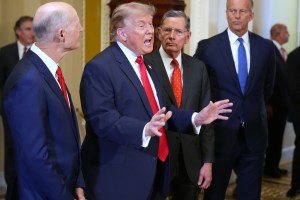
Wyoming’s senior U.S. Sen. John Barrasso had a golden opportunity to defend the constitutionally protected freedom of the press Sunday. Instead, he predictably launched into a feeble defense of President Donald Trump’s White House ban on three news organizations that have criticized him.
Opinion
In an interview on NBC’s “Meet the Press,” Barrasso compared Trump’s vindictive action against CNN, MS NOW and Politico to the president being banned from Twitter (now X) and Facebook during his first term.
“I didn’t see people come to his defense,” the senator said. “So, it goes both ways.”
I can’t believe Barrasso doesn’t recognize the difference between private corporations, which have the right to enforce their own rules for participating on their social media platforms, and the First Amendment’s mandate to allow the media to report the news without interference from the federal government.
Of course, he knows better. But Barrasso apparently views his job as the Senate’s majority whip, the chamber’s No. 2 leadership position, to defend whatever nonsense the president spouts no matter how much it lays waste to the guarantees enshrined in the Bill of Rights.
Throughout his 19 years in the Senate, Barrasso has been a frequent guest on cable TV news shows, including CNN and MS NOW (formerly MSNBC), whenever he wanted to express his views to a national audience. That usually included sticking it to the Democratic administrations of former Presidents Barack Obama and Joe Biden, and bashing Trump’s critics.
It’s no secret to his constituents that one of Barrasso’s top priorities seems to be getting in front of TV cameras and next to powerful politicians. While climbing the GOP Senate leadership ladder, he always hovered over the shoulder of then-Senate Majority Leader Mitch McConnell at news conferences.
“We all respect and value the freedom of the press, it’s in the Constitution,” Barrasso told NBC’s Kristen Welker, but it was just lip service from a politician who has adroitly used the media to get free air time.
If Barrasso truly values a free press, why won’t he even criticize Trump’s personal war against members of the media, whom he disturbingly calls “the enemy of the people?”
If Barrasso truly values a free press, why won’t he call out the president for threatening last Friday to revoke the White House press credentials of other news organizations as he sees fit, creating a climate of fear and intimidation?
“The press has an obligation to report fairly,” Barrasso told Welker. “The president doesn’t see it happening that way.”
No, Trump just brands everything that doesn’t show him in a favorable light as “fake news.” He has a particularly cruel way of trying to humiliate women reporters who are just doing their jobs when they ask Trump valid questions.
Like Welker, who saw Trump storm off her “Meet the Press” set in June when she asked a follow-up question after the president made an unsubstantiated claim about U.S. elections being rigged.
Trump called her “either crooked or stupid.”
When Bloomberg’s Catherine Lucey asked about the release of files related to Jeffrey Epstein, the president of the United States said, “Quiet, piggy.” Katie Rogers of The New York Times wrote an article about Trump’s age and health — perfectly reasonable topics about an 80-year-old commander-in-chief — and Trump lashed out, calling her a “third-rate reporter who is ugly, both inside and out.”
This is the guy Barrasso trusts to assess the fairness of journalists? And decide which news organizations have the right to ask him questions?
Trump has played this game of yanking White House media credentials before, and lost. After a contentious exchange at a news conference in 2018, the president revoked CNN correspondent Jim Acosta’s press pass to the White House grounds. CNN sued, and a Trump-appointed judge overturned the restriction.
“What’s going on here is a flagrant violation of the First Amendment,” Connor Fitzpatrick of the free speech advocacy group Foundation for Individual Rights and Expressions told The Washington Times. “The precedent on this point is clear.”
Barrasso was so at a loss for ammunition to back his argument on NBC, he resorted to pulling a 2020 campaign trope out of the mud: Hunter Biden’s laptop.
“When you take a look at this president, and you take a look at the Hunter Biden laptop,” he said, appearing confused, “if you want to really get into things where the press ignored the reality for a long period of time, said it was a Russian hoax.” Huh?
Then Barrasso abruptly summed up what seemed to be his main point: of course Republicans will win and stay in power.
“The bottom line on all of this is, this is not going to have an impact on an election 44 days from now,” he said. “People are going to go to the voting booth, they’re going to make a decision based on their life, their future, what they believe is best for them and their families.”
Barrasso said the choice is between “common sense Republicans and crazy Democrats.” He claimed Democrats are in “dire straits, as they’re even less popular than Republicans.”
Well, that’s a strange way to put it, since Barrasso admits that Republicans are unpopular. And it turns out to be fake news: A New York Times/Sienna poll last week showed that likely voters favored Democratic congressional candidates over Republicans by nearly 9 percentage points. It’s a metric, the New York Times reported, that is “closely watched by both parties as a leading indicator of political momentum.”
It appears Barrasso’s assessment of where this midterm election is going — which will largely determine Trump’s ability to get anything done in the next two years — is equal parts fake news and wishful thinking. That makes it, like his statements on Trump’s press ban, another example of Barrasso favoring the company line over the truth.
The post Barrasso loves attention from the media, but not protecting press freedoms appeared first on WyoFile.